
Review on Rio
Disclaimer
Our reviews are subjective opinions based on the analysis of our independent writers from around the world. We recommend exercising your own judgment and verifying information independently. We cannot be held liable for decisions made based on our reviews.
Summary
About Rio
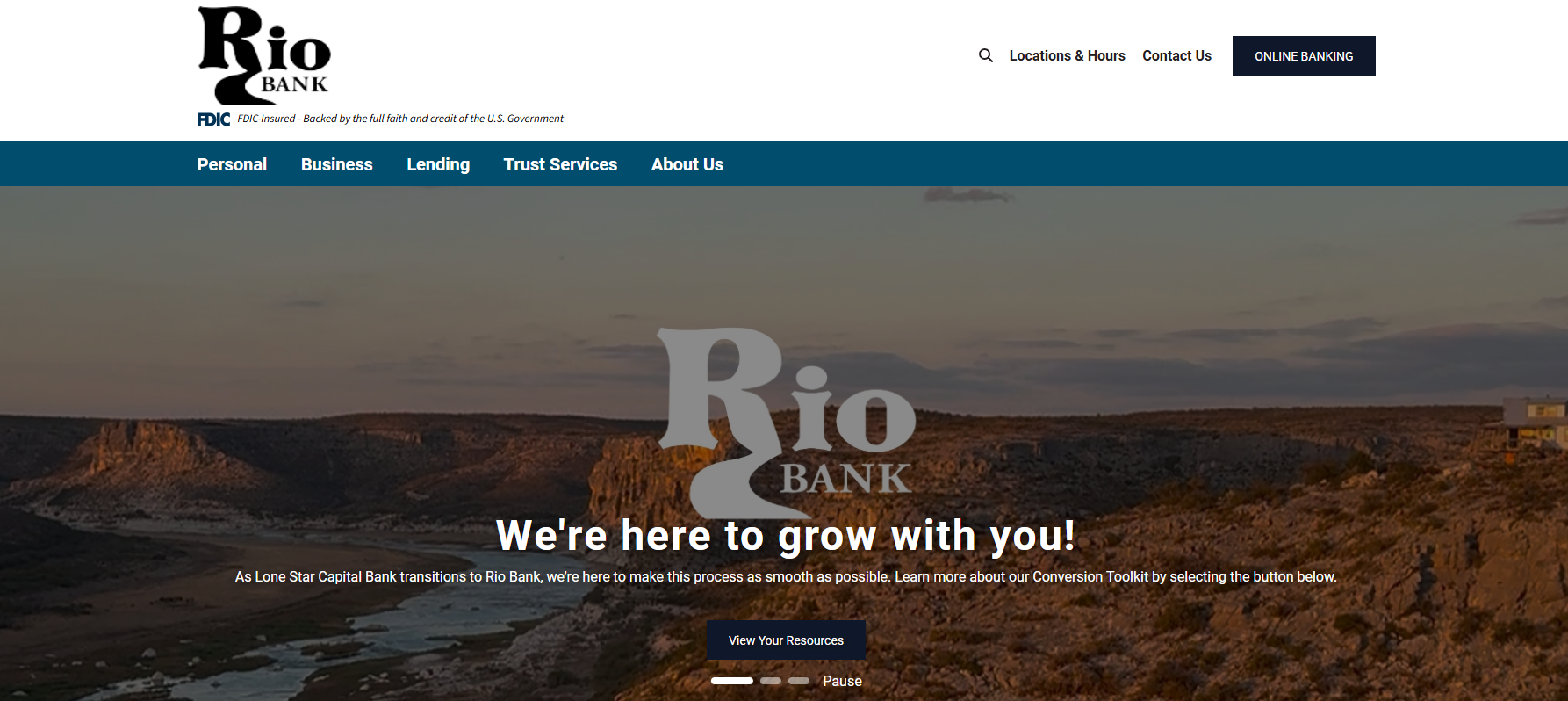
This review examines the website at https://www.rio.bank/ and evaluates its legitimacy. On the surface, the site presents itself as a full‑service online bank offering personal and business banking, digital banking tools, checking/savings accounts, mobile banking, wire transfers, and more. It claims to function with all the trimmings of a modern bank: deposit accounts, mobile deposits, digital alerts, and even trust services.
However, beyond that polished façade there are several troubling issues. For one, the domain extension “.bank” (while not inherently invalid) is relatively rare and invites extra scrutiny. The site’s claims are broad and global (“online bank”), but there is limited transparent proof of full regulatory licensing or a physical presence in jurisdictions outside what seems to be referenced as the U.S. Further, certain statements on the site appear generic and caution‑laden (e.g., disclaimers about not providing “personal, financial or legal advice”). These kinds of disclaimers can be found on genuine bank sites, but here they stand out given other inconsistencies.
In this lengthy analysis I will walk through key observations and red flags, list pros and cons, provide a detailed “post section” discussion as to why I believe the site is very likely a scam (or at least of extremely high risk), answer common questions, and then conclude with final thoughts on whether you should trust or avoid this site.
More Details
Having reviewed the above facts, I lean strongly to the conclusion that while the website may appear legitimate, it is very likely a scam or at least an untrustworthy online “bank” offering. Here is why:
First, the confusion between domain and entity: The domain rio.bank gives the impression of being the online arm of the U.S. bank “Rio Bank” (riobk.com). But the actual publicly verifiable U.S. bank has a different domain and a physical presence. The use of the same NMLS number may be attempting to mislead customers into believing they are dealing with an established institution. Impersonation is a common scam technique.
Second, for users outside the U.S., there is no clear regulatory or deposit insurance information. If you deposit money and the entity is not truly regulated (or is regulated but not authorized in your jurisdiction), you may face no protections. A genuine global bank will list the regulator(s) by country, deposit insurance scheme, etc. The absence of this is a major red flag.
Third, the mismatch of services: e.g., Zelle is U.S.-only, but the site seems to position itself as global (and you in Nigeria are visiting). This suggests the website may be hoping to attract international customers who may not be familiar with U.S.‑centric banking systems and thus are more vulnerable.
Fourth, although the website is polished, that often is the case with sophisticated scam sites — they invest in professional appearance to build trust. The devil is in regulation details, transparency of entity, recourse path, and deposit insurance—which are lacking here.
Fifth, the disclaimers are heavy and shift risk onto the user (“services only where lawfully offered”, “we do not warrant…”). In isolation that is not unusual—but combined with the other factors it signals that the operator might be minimizing liability because they anticipate failure or dispute.
Sixth, I found no independent consumer reviews of this rio.bank domain functioning as a global online bank with strong credentials, whereas the Texan bank is documented. If this website were a legitimate global bank, more independent references would exist.
Seventh, for someone in Nigeria (or anywhere outside the U.S.), the question becomes: where is your money held? Which regulatory body can you appeal to? If the answers are vague or absent, you are giving money to an entity you cannot easily enforce claims against. Scam banks often exploit this cross‑border jurisdiction gap.
In short: the balance of evidence suggests you are dealing with either a non‑regulated entity posing as a bank, or a questionable online banking front. Unless you can verify its regulation status in your country and confirm deposit insurance, proceed with extreme caution or avoid entirely.

Warning: Low score, please avoid this website!
According to our review, this website has a higher risk of being a scam website.
It may attempt to steal your funds under the pretense of helping you make money.
Notice: High Score — Not likely to be a scam website.
According to our review, this website has a low risk of being a scam.
There is minimal indication of fraudulent activity.
Notice: Moderate score — Caution advised.
According to our review, this website shows a moderate risk level based on current data.
There is no strong evidence of a scam, but users should proceed carefully.
0
5 Stars
0
4 Stars
0
3 Stars
0
2 Stars
0
1 Stars
0
Competiting Brands



Photos of Rio

Pros
- It uses standard banking language and mentions known services (mobile deposit, card management, alerts), which can give it an appearance of legitimacy.
- If it were genuine, the online model could offer convenience and accessibility for users in jurisdictions with limited branch infrastructure.
- It provides a Terms of Use page and a Security Center page, which suggests at least some attempt to appear compliant.
Cons
- Major transparency issues: the regulation, jurisdiction, licensing, deposit insurance for global users (especially outside the U.S.) is unclear or absent.
- The potential impersonation of a legitimate U.S. bank (Rio Bank in Texas) raises the risk that the website is not affiliated or is misrepresenting itself.
- Lack of visible physical presence or branch network for global customers means your recourse may be limited if you have issues.
- Marketing to global users while showing U.S.‑centric services (e.g., Zelle) suggests mismatch and perhaps a “bait” for international users.
Website Overview
Country:
USA
Operating Since:
2025
Platforms:
Mobile/Desktop
Type:
Online bank
Spread:
N/A
Funding:
Online bank
Leverage:
N/A
Commission:
N/A
Instruments:
N/A
Keypoints
he global accessibility of the site (you via Nigeria are able to access it) raises the question of jurisdiction — if you open an account, what protections do you have? Where is your money held? What regulator supervises it? This lack of clarity is a major red flag.
The existence of a legitimate bank called “Rio Bank” in Texas complicates matters: fraudsters often piggy‑back on real institutions’ identifiers (e.g., NMLS numbers, licensing statements) to lend credibility. If this website is not truly affiliated, it may be impersonating that institution.
The site uses highly generic language about services (checking, savings, mobile deposit, wire transfer) without providing concrete details such as rates, branch addresses outside the U.S., or governing regulator for an online global banking service.
The site’s disclaimers include “No personal advice” and “services only where lawfully offered” which is typical for real banks too — but in combination with the other red flags they suggest the possibility of a “legitimate‑looking” facade.
Overall Score
11%
Final Thoughts
After viewing and analyzing the site thoroughly by our experts and undergoing the proper process, we have reached a final conclusion.
While at first glance the website https://www.rio.bank/ appears to offer full‑banking services, a deeper dive reveals multiple red flags. The impression of legitimacy is strong, but the substance is weak when it comes to transparency, regulatory clarity, and consumer protection — especially for users outside the United States. The risk of losing funds, lacking recourse, and dealing with an entity that may not be what it claims is too high.
Unless you can independently verify (through your local regulator) that this entity is licensed to offer banking in your jurisdiction and that your deposits will be protected under a recognized deposit insurance scheme, you should treat this site as extremely high risk and likely a scam. In my view, you should not trust this “bank” with any deposits or sensitive personal information.
Comments